Local SEO Audit Checklist: The 2026 Guide to Rank Higher
Use this comprehensive local SEO audit checklist to identify ranking gaps, fix Google Business Profile issues, and improve local search visibility in 2026.

Why a Local SEO Audit Checklist Matters in 2026
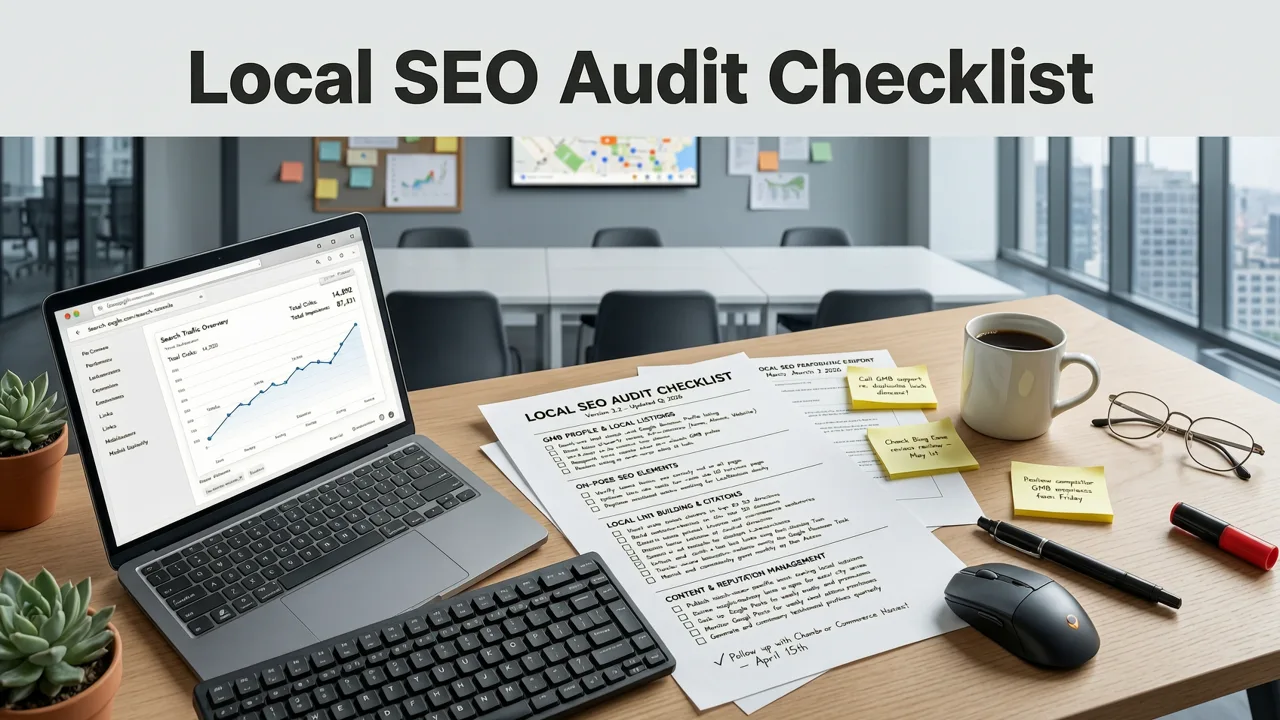
If your business is struggling to appear in the local map pack or losing ground to nearby competitors, a structured evaluation is the fastest path to recovery. This local SEO audit checklist provides a comprehensive framework to identify ranking gaps, optimize your Google Business Profile, and capture more local search traffic in 2026.
Local search behavior has evolved significantly. With the integration of AI overviews and advanced behavioral signals in search algorithms, simply having a verified business listing is no longer enough. Search engines now prioritize businesses that demonstrate strong local relevance, authoritative local citations, and flawless technical performance. A systematic audit reveals exactly where your local strategy is falling short and provides a clear roadmap for improvement.
Whether you manage a single-location retail store or a multi-branch service provider, running a thorough evaluation ensures your digital presence aligns with current algorithmic expectations. It transforms guesswork into a data-driven strategy, allowing you to allocate resources toward the tactics that actually move the needle in local search results.
Step 1: Google Business Profile Optimization
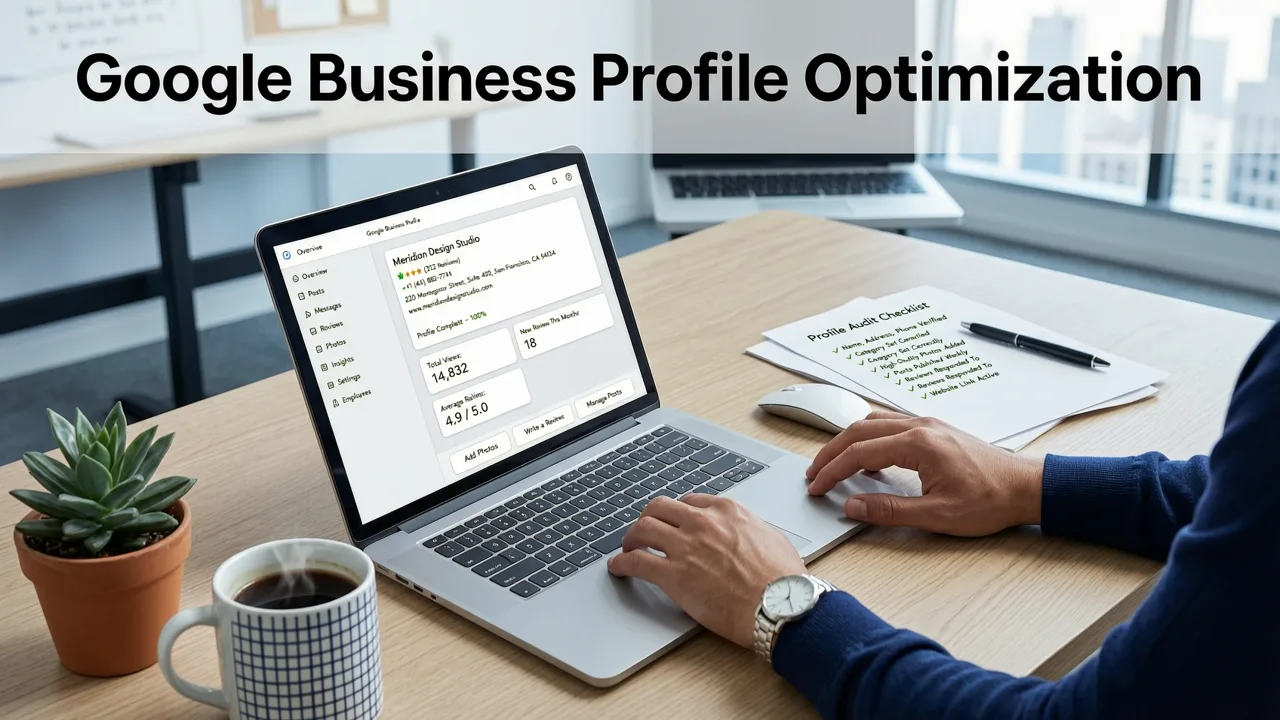
The Google Business Profile (GBP) remains the single most influential factor for local map pack rankings. Your audit must begin and end with a deep dive into this profile to ensure every field is optimized for maximum visibility and conversion.
Primary and Secondary Categories
Verify that your primary category accurately reflects your core business offering. Choosing the wrong primary category is a common error that severely limits local reach. Additionally, ensure all relevant secondary categories are selected to capture adjacent search intents without diluting your primary focus.
Business Information and Attributes
Review your business name, address, phone number, website URL, and operating hours for absolute accuracy. In 2026, search engines heavily weight complete profiles. Ensure you have filled out every available attribute, including accessibility options, payment methods, and service areas. A complete profile signals trust and relevance to both the algorithm and the user.
Posts, Products, and Services
Audit your GBP posts to ensure you are regularly publishing updates, offers, and event information. Check that your products and services catalogs are fully populated with accurate descriptions, pricing, and high-quality images. These elements not only improve user engagement but also provide additional keyword relevance for local queries.
Review Management and Q&A
Analyze your review velocity, average rating, and response rate. Search algorithms favor businesses that actively engage with their reviewers. Furthermore, audit the Questions & Answers section. If you have unanswered questions, address them immediately. You can also proactively populate this section with frequently asked questions to target specific local search queries.
Step 2: On-Page Local SEO Elements
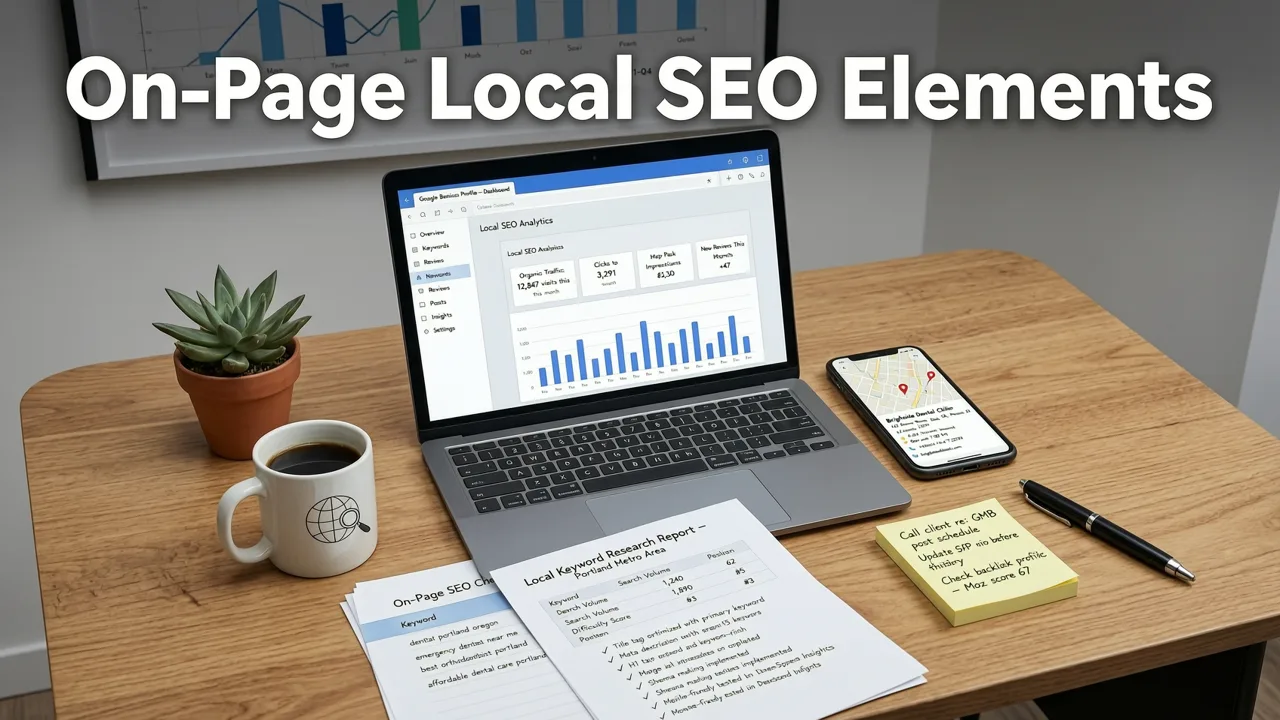
Your website must clearly communicate your local relevance to search engine crawlers. The on-page audit focuses on how well your site structure, content, and metadata align with local search intent.
Localized Title Tags and Meta Descriptions
Review the title tags and meta descriptions for your homepage and core service pages. They should naturally include your primary service and your target city or region. Avoid keyword stuffing; instead, craft compelling, click-worthy descriptions that highlight your local presence and unique value proposition.
Location-Specific Content and Landing Pages
If you serve multiple areas, audit your location landing pages. Each page must offer unique, valuable content tailored to that specific community, rather than just swapping out the city name in a generic template. Include local landmarks, community involvement, and specific service details relevant to that area.
Local Schema Markup
Structured data is critical for helping search engines understand your local context. Audit your site to ensure Schema.org markup is correctly implemented. Specifically, verify the presence of LocalBusiness, Organization, or more specific subtypes like Plumber or Restaurant. Ensure the schema includes your exact NAP data, geo-coordinates, operating hours, and review aggregates.
Step 3: Local Citations and NAP Consistency
Citations are mentions of your business name, address, and phone number (NAP) across the web. They serve as external validation of your business existence and location.
Core Data Aggregators and Directories
Check your presence on major data aggregators and foundational directories. Ensure your NAP data is 100% identical across all platforms. Even minor discrepancies, such as using "St." instead of "Street" or a different phone number format, can confuse search algorithms and dilute your local ranking signals.
Industry-Specific and Local Directories
Beyond the major platforms, audit your presence in niche directories relevant to your industry, as well as local chambers of commerce, tourism boards, and community websites. These hyper-local and industry-specific citations carry significant weight in establishing topical and geographical authority.
Step 4: Technical SEO for Local Search
Technical health forms the foundation of your local SEO strategy. If search engines cannot efficiently crawl and index your site, your local optimizations will not yield results.
Mobile-First Indexing and Usability
Local searches are predominantly conducted on mobile devices. Audit your site using mobile usability tests to ensure buttons are clickable, text is legible without zooming, and content fits the screen. A poor mobile experience directly harms local rankings and increases bounce rates.
Core Web Vitals and Page Speed
Site speed is a confirmed ranking factor. Evaluate your Core Web Vitals, focusing on Largest Contentful Paint (LCP), Interaction to Next Paint (INP), and Cumulative Layout Shift (CLS). Optimize image sizes, leverage browser caching, and minimize render-blocking resources to ensure your pages load instantly for users on the go.
Crawlability and Index Status
Review your Google Search Central account to check for crawl errors, indexing issues, and blocked resources. Ensure your robots.txt file and XML sitemaps are correctly configured and that your most important local landing pages are fully indexed and accessible to search engine bots.
Step 5: Local Link Building and Authority
Backlinks remain a vital component of overall domain authority, which indirectly but powerfully influences local search rankings. The focus here is on the quality and local relevance of your link profile.
Analyzing Local Backlink Relevance
Use a free backlink checker tool to analyze your current link profile. Look for links from local news outlets, community blogs, local sponsorships, and regional business associations. These local links are highly valuable because they reinforce your geographical relevance.
Identifying and Disavowing Toxic Links
While auditing for good links, also identify toxic or spammy backlinks. Links from irrelevant directories, link farms, or penalized domains can harm your site's trustworthiness. Isolate these toxic links and prepare a disavow file if necessary to protect your local ranking potential.
The Complete Local SEO Audit Checklist
To streamline your evaluation process, use the following table as a quick reference guide. This visual aid summarizes the core components of a comprehensive local SEO audit, helping you track progress and prioritize tasks.
| Audit Category | Key Checkpoints | Priority Level |
|---|---|---|
| Google Business Profile | Category accuracy, NAP completeness, attributes, posts, review responses. | Critical |
| On-Page Local SEO | Localized title tags, unique location pages, LocalBusiness schema markup. | High |
| Citations & NAP | Exact match NAP across aggregators, industry directories, local sites. | High |
| Technical SEO | Mobile usability, Core Web Vitals, crawl errors, index status. | Critical |
| Local Link Profile | Relevance of local backlinks, identification of toxic links. | Medium |
Executing Your Local SEO Strategy
Completing the audit is only the first phase; the real value lies in executing the fixes. Prioritize critical issues first, such as correcting NAP inconsistencies, fixing technical crawl errors, and optimizing your primary Google Business Profile categories. Once the foundation is secure, move on to high-priority tasks like building out location-specific content and acquiring authoritative local backlinks.
If you are managing this process internally, understanding how to do an SEO audit yourself can save time and help you maintain continuous oversight of your digital presence. Pairing this knowledge with the best SEO tools for small business ensures you have the right data and automation to track your progress effectively.
Conclusion
A rigorous local SEO audit checklist is essential for maintaining visibility in an increasingly competitive digital landscape. By systematically evaluating your Google Business Profile, on-page elements, citations, technical health, and link profile, you can identify hidden gaps and implement targeted improvements. Regular audits ensure your business remains aligned with search engine expectations, driving sustained local traffic, higher rankings, and increased revenue. Take control of your local search presence today by putting this checklist into action and refining your strategy for the year ahead.
Frequently Asked Questions
What is the most critical component of a local SEO audit?
The Google Business Profile is the most critical component, as it directly influences local map pack rankings, provides essential business information to searchers, and serves as the primary trust signal for local search algorithms.
How often should businesses perform a local SEO audit?
Businesses should perform a comprehensive local SEO audit at least twice a year. However, monthly checks of Google Business Profile insights, review responses, and local citation consistency are recommended to maintain competitive rankings.
Does NAP consistency still impact local rankings in 2026?
Yes, Name, Address, and Phone number (NAP) consistency remains a foundational ranking factor. Search engines use consistent NAP data across the web to verify the legitimacy and physical location of a business, which directly impacts local search visibility.
How can a business identify toxic local backlinks during an audit?
A business can identify toxic local backlinks by analyzing their link profile for irrelevant directories, spammy anchor text, or links from penalized domains. Using a dedicated backlink analysis tool helps isolate these links for disavowal.
Related Articles


Explore more practical SEO Services and appraisal guides.
View all articles