Best Local SEO Audit Tool for Small Businesses (2026)
Discover the best local SEO audit tool in 2026 to uncover ranking gaps, fix Google Business Profile issues, and drive more local leads for your small business.

Why a Local SEO Audit Tool Is Essential in 2026
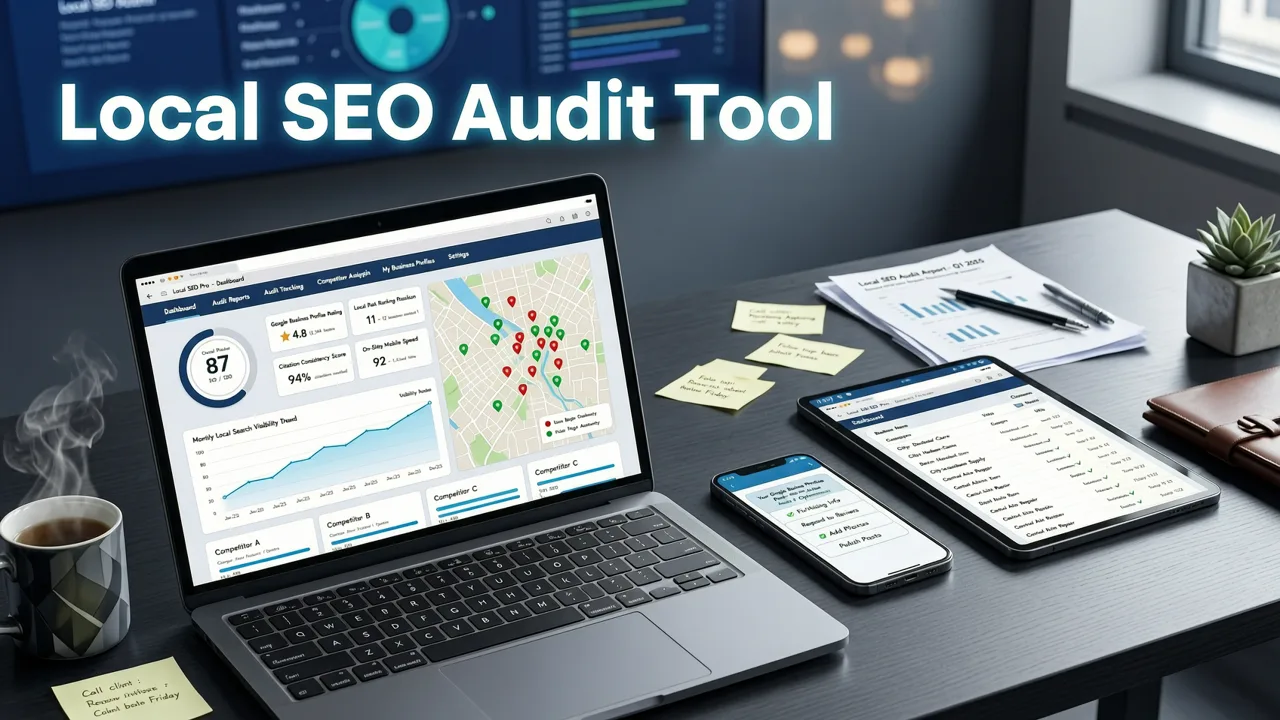
If you run a local service business, your next customer is likely searching on a mobile device right now — and Google is deciding whether to show you or your competitor. The best local SEO audit tool in 2026 doesn't just scan your website for broken links; it diagnoses exactly why your business isn't showing up in the Local Pack, Google Maps, or organic local results.
A high-quality local SEO audit tool evaluates your Google Business Profile, citation consistency, on-page local signals, review velocity, schema markup, and mobile usability in a single report. It gives you a prioritized roadmap so you can fix the issues that actually move rankings — not waste time on low-impact tweaks.
In this guide, we break down what to look for in a local SEO audit tool, compare the leading options for small businesses, and walk you through a practical audit workflow you can run today.
What Makes a Local SEO Audit Tool Different From a General SEO Tool?
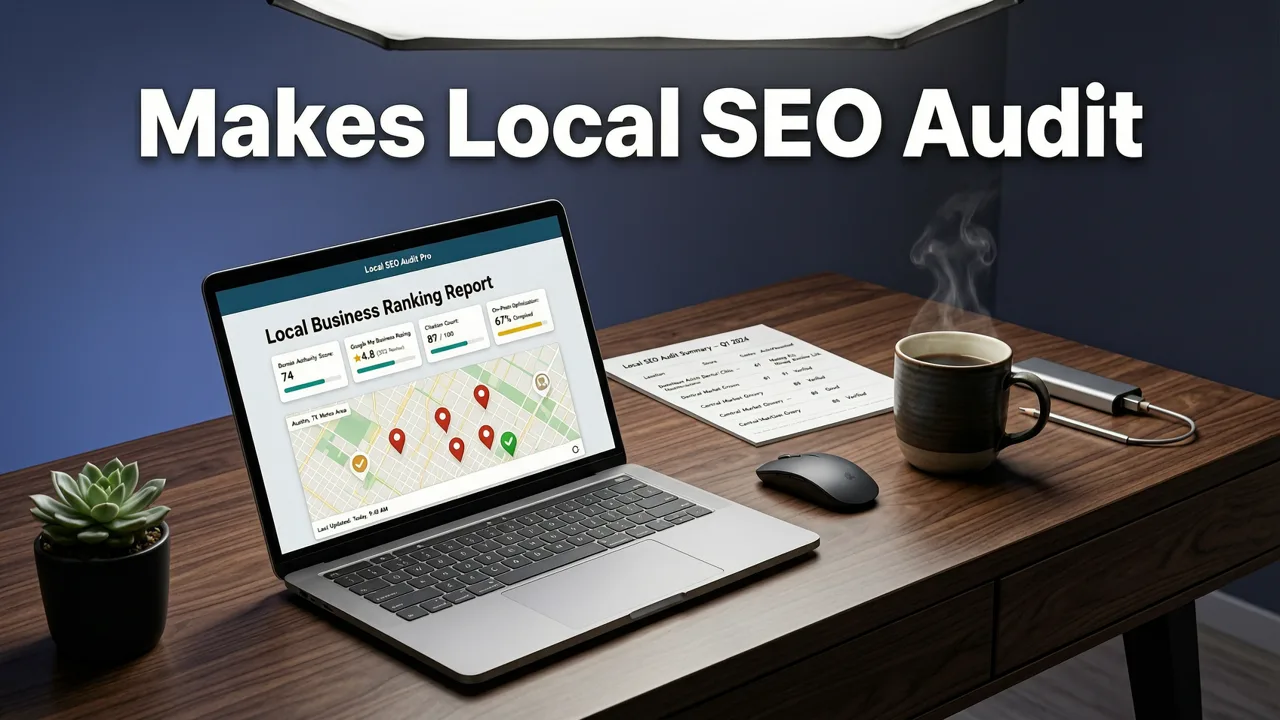
Most general-purpose SEO tools focus on domain authority, backlinks, and organic keyword rankings. While those metrics matter, they don't tell you why your plumbing company in Austin isn't appearing in the Local Pack when someone searches "emergency plumber near me."
A dedicated local SEO audit tool evaluates signals that are unique to local search:
- Google Business Profile (GBP) completeness and optimization
- NAP (Name, Address, Phone) consistency across directories and citation sites
- Local schema markup such as LocalBusiness, FAQPage, and Review schema
- Review signals including volume, velocity, sentiment, and response rate
- Local pack and map ranking positions for geo-modified keywords
- Mobile performance and Core Web Vitals as they affect local mobile searchers
If your audit tool doesn't check these factors, it's not auditing your local SEO — it's auditing your website SEO. That's a critical distinction in 2026.
Key Features to Look for in the Best Local SEO Audit Tool
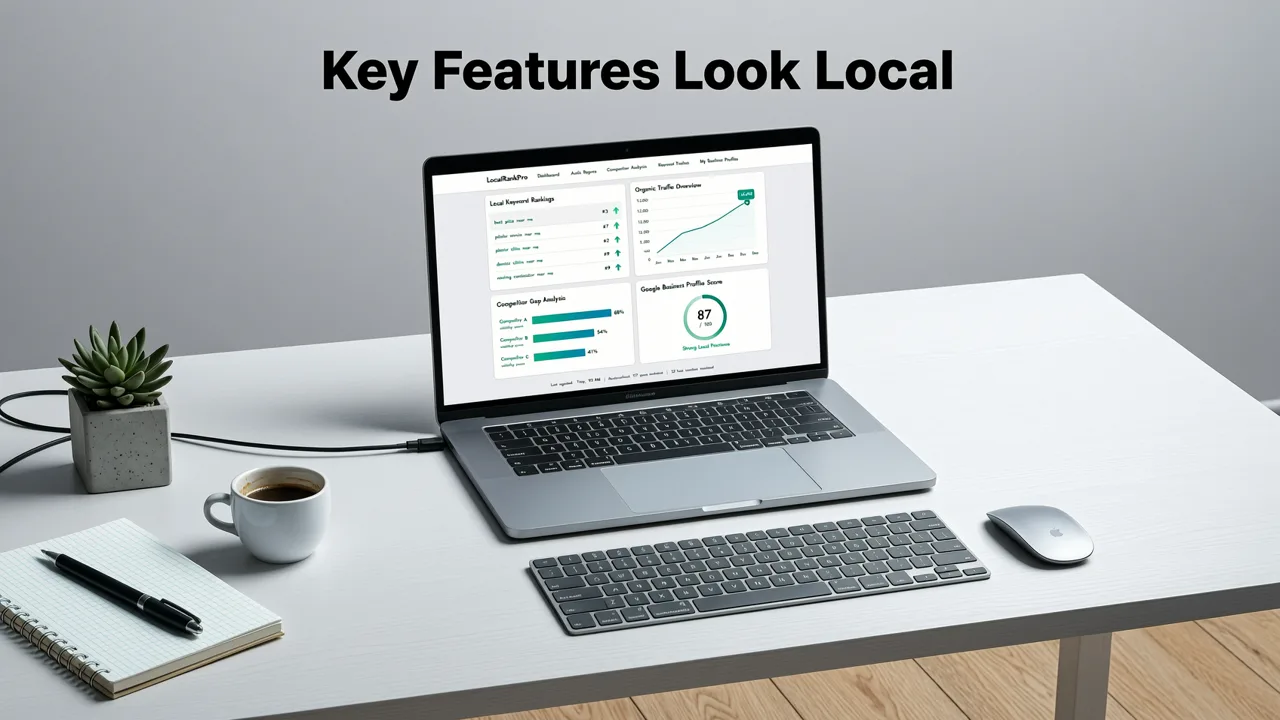
Not every tool that claims to do local SEO audits actually delivers actionable results. Here are the features that separate the best local SEO audit tool from the rest of the pack.
Google Business Profile Diagnostics
Your GBP is the single most important asset in local search. The tool should flag missing categories, incomplete service areas, suppressed listings, duplicate profiles, and posts that haven't been updated in over 30 days. It should also verify that your primary category aligns with your highest-intent search terms.
Citation Audit and NAP Consistency Checks
Inconsistent citations confuse Google's local algorithm. The best tools crawl hundreds of directories — from Yelp and Yellow Pages to industry-specific sites — and flag every discrepancy in your business name, address, or phone number. Look for tools that also identify new citation opportunities you're missing.
Local Keyword Ranking Tracking
Local rankings vary by searcher location. A strong audit tool tracks your positions across a grid of zip codes or radii around your business, not just a single static location. This reveals whether you're invisible in certain neighborhoods or service areas.
On-Page Local Signal Analysis
The tool should evaluate whether your location pages include localized title tags, meta descriptions, H1s, embedded Google Maps, and LocalBusiness schema. It should also check for thin content on location-specific pages — a common problem for multi-location businesses.
Review Monitoring and Competitive Benchmarking
Review count, rating, and response rate directly influence local rankings and click-through rates. Your audit tool should benchmark your review profile against the top three competitors in your Local Pack and alert you when your review velocity falls behind.
Technical Health and Core Web Vitals
Local searchers are overwhelmingly on mobile. If your site loads slowly or fails Core Web Vitals thresholds, you'll lose both rankings and conversions. The tool should surface page speed issues, render-blocking resources, and mobile usability errors.
Top Local SEO Audit Tools for Small Businesses in 2026
Here's a comparison of the most effective local SEO audit tools available to small businesses this year.
| Tool | Best For | GBP Audit | Citation Check | Grid Rankings | Starting Price |
|---|---|---|---|---|---|
| SEOServisHQ Audit | Full-service small business audits | Yes | Yes | Yes | Custom |
| BrightLocal | Multi-location citation and GBP tracking | Yes | Yes | Yes | $39/mo |
| Moz Local | Citation distribution and monitoring | Partial | Yes | Limited | $14/mo |
| Whitespark | Local finder and citation building | Yes | Yes | Yes | $29/mo |
| Semrush (Listing Management) | All-in-one SEO + local | Yes | Yes | Yes | $139/mo |
For most small businesses, the ideal local SEO audit tool combines GBP diagnostics, citation monitoring, and grid-based rank tracking in one dashboard. If you manage multiple locations, prioritize tools that scale without a per-location price explosion.
How to Run a Local SEO Audit in 5 Steps
Whether you use a dedicated tool or a combination of free and paid resources, follow this workflow to get a complete picture of your local SEO health.
Step 1: Audit Your Google Business Profile
Log into your GBP dashboard and verify every field is complete: business name, address, phone, website, hours, categories, attributes, services, and business description. Check for duplicate listings using the Google Search Central documentation guidelines. Make sure your primary category matches your highest-volume search intent.
Step 2: Check Citation Consistency
Run your business name, address, and phone number through a citation audit tool. Document every inconsistency — even small variations like "St." versus "Street" can dilute local signals. Fix the errors on the source directory, not just in your records.
Step 3: Evaluate On-Page Local Signals
Review your homepage and each location page for localized title tags, schema markup, and content depth. If you're new to this process, our Local SEO Checklist for Small Business (2026 Edition) walks through every on-page element you need to validate.
Step 4: Analyze Local Keyword Rankings
Track your positions for geo-modified keywords across a grid of locations. Identify neighborhoods or zip codes where you rank outside the top three. These gaps represent your highest-priority optimization opportunities. For a deeper dive into keyword strategy, see our guide on How to Do Keyword Research for Beginners (2026 Guide).
Step 5: Benchmark Reviews Against Competitors
Compare your review count, average rating, and response rate against the businesses ranking above you in the Local Pack. If you're behind, build a review generation system — asking satisfied customers within 24 hours of service delivery consistently outperforms generic email campaigns.
Common Local SEO Issues a Good Audit Tool Will Uncover
After running hundreds of local audits, these are the issues that appear most frequently — and the ones that have the biggest impact on rankings once fixed.
- Suppressed or duplicate GBP listings that split your review count and confuse Google
- Incorrect primary category that misaligns your profile with searcher intent
- Missing or broken LocalBusiness schema on your website
- Thin or duplicated location pages that fail to rank for city-specific queries
- NAP inconsistencies across 10 or more citation sources
- Zero Google Business Profile posts in the last 60 days
- Unresponded negative reviews that damage both rankings and trust
- Mobile page speed below Core Web Vitals thresholds
A quality local SEO audit tool surfaces all of these in a single report, ranked by impact, so you know exactly what to fix first.
How Often Should You Run a Local SEO Audit?
Local search is dynamic. Google updates its local algorithm multiple times per year, competitors open and close, and your own business details change. We recommend running a full local SEO audit at least once per quarter, with lighter monthly checks on your GBP, reviews, and ranking grid.
If you've recently moved locations, changed your phone number, or expanded into new service areas, run an audit immediately. Even small changes can trigger ranking fluctuations if they aren't reflected consistently across your profile, website, and citations.
When to Bring in an SEO Agency for Your Local Audit
A DIY audit works well if you have a single location and the time to learn the tools. But if you manage multiple locations, operate in a competitive metro market, or need ongoing optimization beyond the initial audit, partnering with an SEO agency often delivers faster and more sustainable results.
Before committing, review an SEO Agency Pricing Guide so you understand what to expect and how to evaluate proposals. A good agency will run a comprehensive local SEO audit as the first step of any engagement and use those findings to build a prioritized, measurable roadmap.
Final Thoughts: The Best Local SEO Audit Tool Is the One You Actually Use
The best local SEO audit tool for your small business is the one that fits your budget, covers all the local-specific signals we've outlined, and produces a clear action plan — not just a data dump. Whether you choose a dedicated local platform or an all-in-one SEO suite, the key is consistency. Run the audit, fix the issues, and re-audit quarterly to track your progress.
Local SEO in 2026 rewards businesses that stay on top of their Google Business Profile, keep their citations clean, and deliver a fast, mobile-friendly experience. The right audit tool makes all of that manageable — and turns hidden problems into visible growth.
Ready to find out what's holding your local rankings back? Start with a comprehensive local SEO audit today and build the roadmap that turns searchers into customers.
Frequently Asked Questions
What is a local SEO audit tool?
A local SEO audit tool is a software platform that evaluates your Google Business Profile, citation consistency, on-page local signals, review profile, schema markup, and local keyword rankings to identify issues preventing your business from appearing in local search results and the Local Pack.
How often should I run a local SEO audit?
You should run a full local SEO audit at least once per quarter. If you've recently changed your address, phone number, service areas, or business name, run an audit immediately. Monthly spot-checks on your Google Business Profile and review profile are also recommended.
Can I do a local SEO audit for free?
You can perform a basic local SEO audit using free tools like Google Search Console, Google Business Profile insights, and manual citation checks. However, dedicated local SEO audit tools provide deeper diagnostics — including grid-based rank tracking, automated citation scanning, and competitive benchmarking — that free tools cannot match.
What's the most important factor a local SEO audit tool should check?
Your Google Business Profile is the single most important factor. The audit tool should verify profile completeness, correct primary category, NAP accuracy, post frequency, review response rate, and check for suppressed or duplicate listings.
How much does a local SEO audit tool cost?
Local SEO audit tools range from about $14 per month for basic citation monitoring to $139+ per month for all-in-one platforms with grid rank tracking and competitive analysis. Many SEO agencies also include a comprehensive audit as part of their monthly retainer.
Related Articles


Explore more practical SEO Services and appraisal guides.
View all articles