Buy Backlinks Safe in 2026: The Real Risks and Smarter Alternatives
Want to buy backlinks safe from penalties? Learn the real risks of purchasing links in 2026, how Google detects them, and proven strategies to build authority without

Can You Really Buy Backlinks Safe in 2026?
If you have been researching link building, you have probably seen countless ads promising that you can buy backlinks safe from Google penalties. The short answer is that no purchased link is 100 percent penalty-proof, but there are strategies that dramatically reduce your risk while still building the authority your site needs to rank. In 2026, Google's link spam algorithms and AI-driven quality signals have become far more sophisticated, which means the old tactics of buying cheap links from link farms or private blog networks will get your site penalized faster than ever.
This guide breaks down exactly what happens when you purchase backlinks, how Google detects paid links today, what separates a risky link from a relatively safer one, and the alternative strategies that deliver the same ranking lift without the downside. By the end, you will have a clear framework for deciding whether buying links makes sense for your business and how to execute the safest possible approach if you choose to proceed.
Why the Question of Buying Backlinks Safe Still Matters in 2026
Link building remains one of the top three ranking factors according to every major SEO study. Businesses that invest in high-quality backlinks consistently outrank competitors who rely on content alone. That reality is why the temptation to simply purchase links persists year after year.
However, the enforcement side has also evolved. Google's Search Central documentation has long stated that buying or selling links that pass PageRank violates their spam policies. In 2026, the detection mechanisms are more nuanced than ever, combining pattern recognition, natural language processing, and behavioral signals to identify unnatural link velocity, irrelevant anchor text distributions, and connections to known link-selling networks.
The result is a landscape where the question is no longer simply whether you can buy backlinks safe, but rather whether the risk-to-reward ratio makes sense for your specific situation and how you can minimize exposure if you do invest in paid link placements.
How Google Detects Purchased Backlinks in 2026
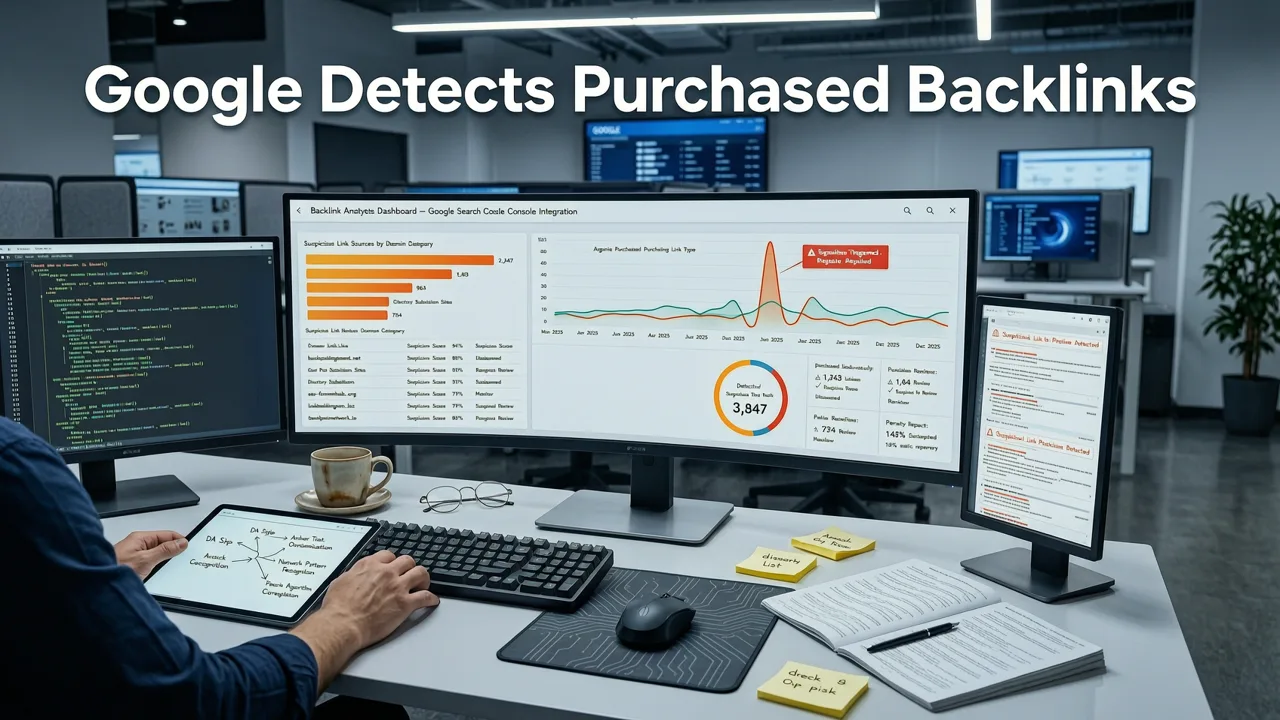
Understanding how Google identifies paid links is essential before you make any decision. The detection systems in 2026 go far beyond simple pattern matching.
Algorithmic Link Spam Detection
Google's link spam update, which has been iteratively refined over the past several years, uses machine learning models trained on millions of confirmed spammy link patterns. These models evaluate factors including the linking page's topical relevance, the naturalness of anchor text, the linking domain's overall link behavior, and whether the link appears in a context that suggests editorial placement versus paid placement.
Behavioral and Footprint Analysis
Google also tracks behavioral footprints across the web. If a domain has links pointing to it from websites that all use the same outreach template, publish on similar schedules, or share hosting infrastructure, those patterns flag the entire cluster for review. This is one of the primary reasons private blog networks get detected and devalued.
Manual Actions and Algorithmic Devaluation
There are two types of consequences. Algorithmic devaluation simply ignores the link, meaning you paid for something that provides no ranking benefit. A manual action is far more severe, resulting in a formal penalty that can suppress your entire site's visibility until you submit a reconsideration request and clean up your link profile.
What Makes a Backlink Purchase Risky
Not all purchased links carry the same level of risk. Understanding the risk spectrum helps you make informed decisions.
High-Risk Link Sources
- Link farms and PBNs: Networks of sites built solely for selling links are the easiest for Google to detect and the most likely to trigger penalties.
- Fiverr and low-cost marketplaces: Bulk link packages offering hundreds of links for a few dollars almost always come from spammy sources.
- Automated directory submissions: Low-quality web directories that accept any submission provide no editorial value.
- Comment spam and forum links: These are universally devalued and can signal manipulative behavior.
Lower-Risk Link Sources
- Editorial guest posts on real publications: When you pay for the time and effort of creating quality content for a legitimate publication, the link that results is closer to a natural editorial link.
- Sponsored content with proper disclosure: Google allows sponsored links as long as they use the sponsored or nofollow attribute. While these do not pass traditional PageRank, they can still drive referral traffic and brand visibility.
- Digital PR and newsworthy placements: Paying a PR agency to earn coverage in relevant publications is one of the safest approaches because the links result from genuine editorial interest.
A Comparison of Link Building Approaches in 2026
| Approach | Risk Level | Typical Cost | Long-Term Value | Penalty Potential |
|---|---|---|---|---|
| PBN Links | Very High | $20–$200 per link | None if detected | Manual action likely |
| Fiverr Bulk Packages | Very High | $5–$50 for hundreds | Negative | High |
| Sponsored Posts (nofollow) | Low | $100–$1,000 per placement | Traffic and brand exposure | Minimal |
| Editorial Guest Posts | Moderate | $200–$1,500 per placement | High if on real sites | Low when done properly |
| Digital PR Campaigns | Very Low | $2,000–$10,000 per campaign | Very high | Negligible |
| Organic Link Earning | None | Time and content investment | Highest | None |
If You Decide to Buy Backlinks, Here Is How to Minimize Risk
If you have weighed the risks and decided that purchasing links is the right move for your business, there are specific practices that reduce your exposure significantly.
Vet Every Domain Thoroughly
Before accepting any link placement, analyze the linking domain using a free backlink checker tool to verify that it has real organic traffic, a natural link profile, and genuine editorial content. Domains that exist only to sell links will show red flags immediately, including zero organic traffic, an unnatural ratio of outbound links to content, and connections to other link-selling sites.
Demand Editorial Context
A link embedded within a well-written, topically relevant article is far safer than a link placed in a sidebar, footer, or dedicated link page. Google evaluates the surrounding context to determine whether a link was editorially placed or commercially arranged.
Diversify Your Anchor Text
Over-optimized anchor text is one of the clearest signals of paid links. In a natural link profile, the majority of anchor text consists of brand names, URLs, and generic phrases like click here. Exact-match commercial anchor text should represent a small fraction of your overall profile.
Control Link Velocity
Acquiring dozens of links in a short period, especially from similar types of sites, triggers algorithmic scrutiny. Spread your link acquisition over weeks and months, and vary the types of sites and content formats you use.
Avoid Toxic Link Neighborhoods
If you are not sure whether your current or newly acquired links are causing problems, review our guide on toxic backlinks to learn how to identify and disavow harmful links before they compound into a larger penalty situation.
Smarter Alternatives to Buying Backlinks
For many businesses, the safest and most sustainable path to building authority does not involve purchasing links at all. These strategies deliver compounding results over time.
Guest Posting on Authority Sites
Writing high-quality guest posts for legitimate publications in your niche remains one of the most effective link building strategies. The key is to focus on sites with real audiences and editorial standards, not sites that exist solely to publish guest content for payment. Our detailed guide on guest posting backlinks walks through the exact process for doing this correctly in 2026.
Digital PR and HARO-Style Outreach
Helping journalists by providing expert commentary generates high-authority editorial links from news sites and industry publications. This approach is completely white hat and builds genuine brand authority alongside your link profile.
Creating Linkable Assets
Original research, comprehensive guides, free tools, and interactive calculators naturally attract links because other websites want to reference valuable resources. Investing in linkable assets often produces a higher return than purchasing links because the links continue to accumulate over time without ongoing costs.
Strategic Partnerships and Resource Pages
Building genuine relationships with complementary businesses and industry organizations often leads to natural link opportunities through resource pages, partnership announcements, and co-created content.
How to Audit Your Existing Backlink Profile
Whether you have purchased links in the past or are simply concerned about your current link profile, running a comprehensive audit is essential. Start with a free SEO audit tool to get a baseline understanding of your site's overall health, then dive deeper into your backlink profile specifically.
Look for patterns that suggest paid links you may have forgotten about, connections to known spam networks, or an unnatural concentration of exact-match anchor text. If you identify problematic links, you can submit them through Google's disavow tool to distance your site from their negative effects.
For structured data validation and to ensure your site meets Google's current technical standards, the Schema.org structured data reference provides the official specifications for implementing markup that helps search engines understand your content.
The Bottom Line on Buying Backlinks Safe
The honest truth is that no purchased link is completely safe from detection in 2026. Google's algorithms have become exceptionally good at identifying commercial link patterns, and the consequences of getting caught range from wasted investment to full-site penalties that can take months to recover from.
That said, there is a spectrum of risk. Digital PR campaigns, editorial guest posts on genuine publications, and properly disclosed sponsored content carry far less risk than PBN links or bulk marketplace packages. If you choose to invest in any form of paid link building, prioritize quality, relevance, and natural integration over volume and cheap pricing.
The smartest businesses in 2026 are focusing on earning links through exceptional content, genuine outreach, and strategic relationships. These approaches take more time and effort upfront, but they build a foundation of authority that no algorithm update can undermine.
Ready to build a backlink profile that drives real results without the risk? Start by auditing your current site health and link profile, then develop a sustainable strategy that combines content marketing, digital PR, and selective editorial partnerships. Your future rankings will thank you.
Frequently Asked Questions
Is it safe to buy backlinks in 2026?
No purchased backlink is 100 percent safe from Google detection in 2026. Google's link spam algorithms use machine learning to identify paid link patterns, and penalties range from link devaluation to full manual actions. Lower-risk options include editorial guest posts on real publications, digital PR campaigns, and properly disclosed sponsored content with nofollow attributes.
What happens if Google catches you buying backlinks?
Google can either algorithmically devalue the purchased links, meaning they provide no ranking benefit, or issue a manual action that suppresses your entire site's visibility. Recovering from a manual action requires identifying and removing or disavowing the problematic links, then submitting a reconsideration request, which can take weeks or months.
What is the safest way to build backlinks in 2026?
The safest approach is earning links organically through exceptional content, digital PR outreach, guest posting on legitimate publications with real audiences, and building strategic industry partnerships. These methods carry virtually no penalty risk and produce compounding results over time.
How can I check if my current backlinks are safe?
Use a backlink checker tool to analyze your link profile for red flags such as links from PBNs, link farms, irrelevant sites, or an unnatural concentration of exact-match anchor text. Identify toxic links and submit them through Google's disavow tool to protect your site from potential penalties.
Are nofollow sponsored links worth paying for?
Nofollow sponsored links do not pass traditional PageRank for direct ranking benefit, but they can still drive referral traffic, increase brand visibility, and contribute to a natural-looking link profile. They also carry minimal penalty risk since they comply with Google's guidelines for disclosed paid placements.
Related Articles


Explore more practical SEO Services and appraisal guides.
View all articles