Hire a Small Business SEO Audit Service in 2026
Looking to hire a small business SEO audit service? Discover what a professional audit covers, how it drives growth in 2026, and what to expect from experts.

Why Hire a Small Business SEO Audit Service in 2026?

If your website traffic has plateaued or dropped, the fastest way to identify the bottleneck is a comprehensive website health check. While automated scanners provide a surface-level overview, choosing to hire a small business SEO audit service gives you the deep, strategic analysis required to fix complex issues and capture organic growth in 2026.
Search engines have evolved significantly. AI-driven search features, stricter algorithmic spam policies, and an increased emphasis on topical authority mean that basic on-page tweaks no longer guarantee visibility. A professional evaluation looks beyond simple keyword density to evaluate how well your site aligns with modern search engine guidelines, user intent, and technical performance standards.
For business owners and marketing managers, the primary goal is sustainable growth. A professional audit acts as a diagnostic roadmap, highlighting exactly where your site is losing potential customers and providing a prioritized list of actionable fixes.
What a Professional SEO Audit Actually Covers
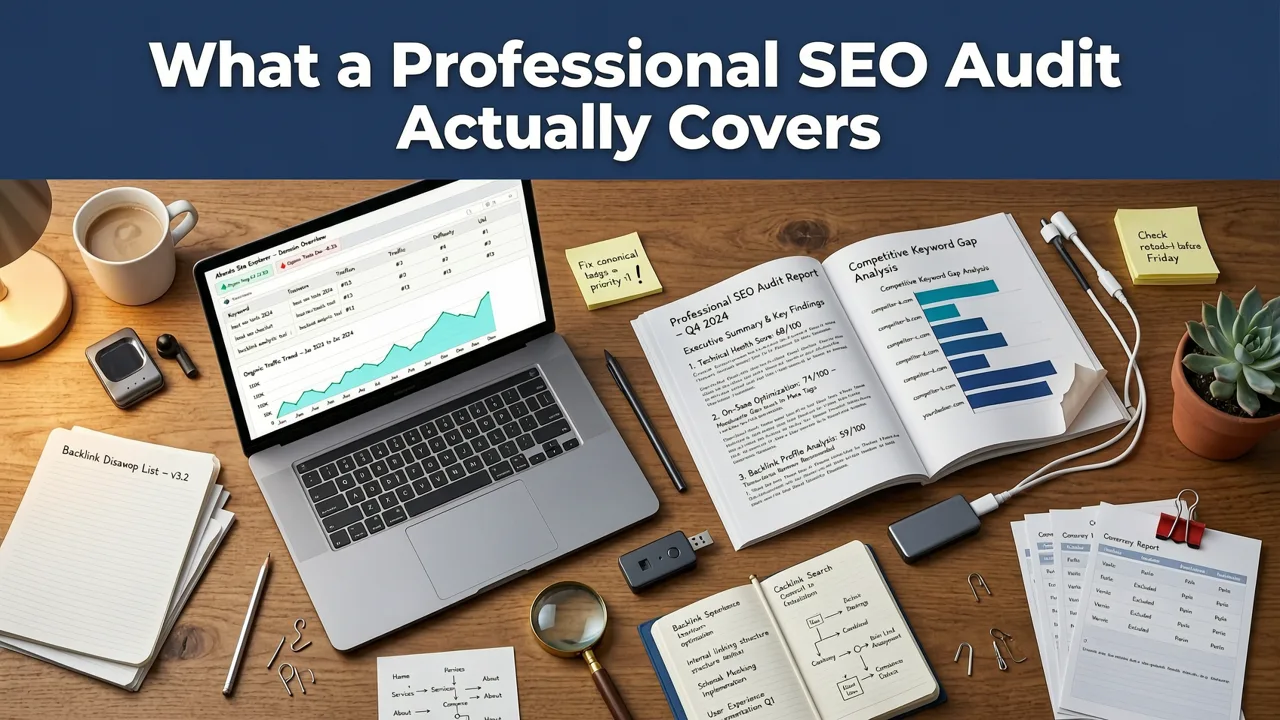
A thorough evaluation is not just a list of broken links. It is a multi-layered analysis of your digital presence. When experts assess a website, they break the process down into several critical pillars.
Technical SEO Health
Technical health is the foundation of search visibility. If search engine bots cannot crawl and index your site efficiently, your content will never rank. A professional technical SEO evaluation examines crawlability, indexation status, site architecture, and Core Web Vitals. Experts also review how well your site handles JavaScript rendering and mobile-first indexing requirements. For the most accurate baseline on technical requirements, the Google Search Central documentation remains the definitive resource for understanding how modern crawlers interact with web pages.
On-Page Optimization and Content Alignment
Having content is not enough; it must satisfy user intent. An on-page audit evaluates whether your pages are properly structured with semantic HTML, optimized meta tags, and logical heading hierarchies. More importantly, it assesses whether the content actually answers the queries users are typing into search engines. In 2026, search algorithms heavily favor content that demonstrates real expertise and covers topics comprehensively, rather than thin pages targeting single keywords.
Off-Page Signals and Link Profile Evaluation
Your backlink profile remains a strong indicator of authority, but it also carries significant risk if not managed properly. An off-page audit identifies toxic links, unnatural anchor text distribution, and missed opportunities for digital PR. While you might use a Free Backlink Checker Tool to get a preliminary look at your referring domains, a professional service provides the context needed to disavow harmful links and build a sustainable authority strategy. This is especially critical when navigating the complexities of modern link building, as detailed in our guide on how to buy backlinks safe from penalties.
Local SEO and Structured Data
For businesses with a physical presence or a specific service area, local search visibility is paramount. A local SEO audit checks Name, Address, and Phone number (NAP) consistency across directories, evaluates Google Business Profile optimization, and analyzes local citation quality. Furthermore, experts will review your implementation of structured data. Properly formatted schema markup helps search engines understand your content context, and referencing the Schema.org vocabulary ensures your site is communicating effectively with modern algorithms.
DIY Tools vs. Hiring a Small Business SEO Audit Service
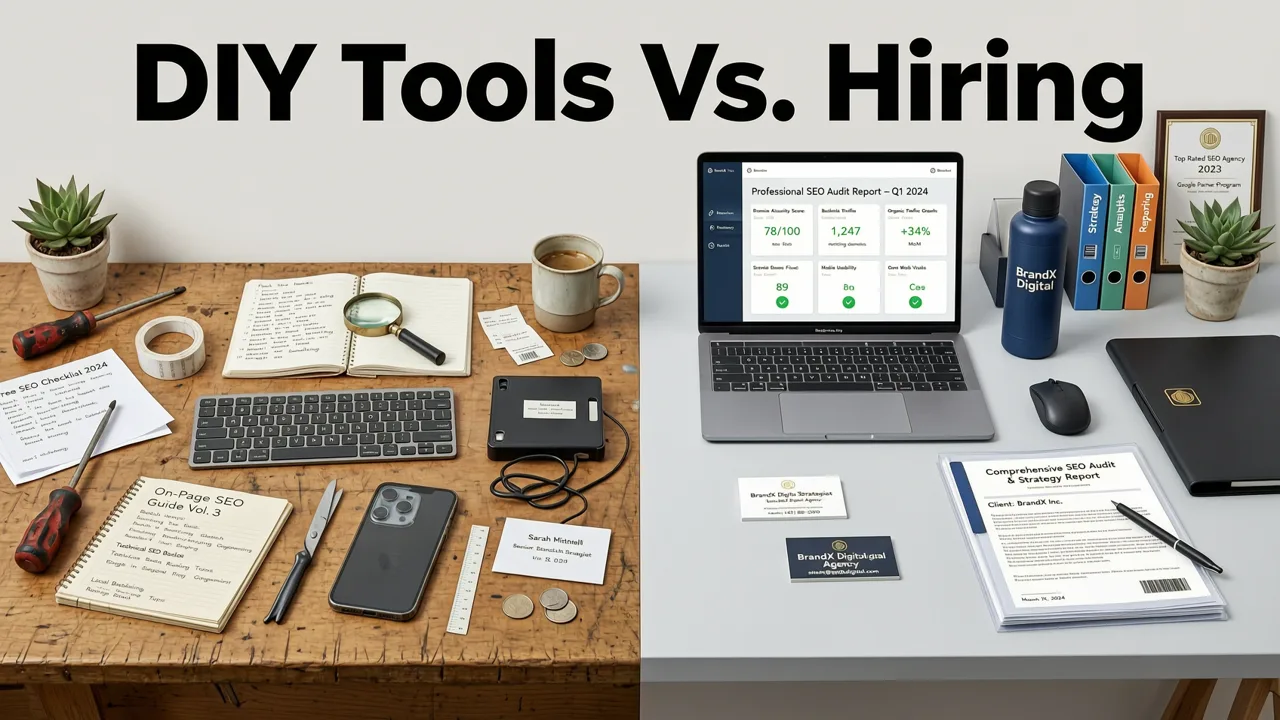
Many business owners wonder if they can handle the diagnostic phase internally. While automated platforms are useful for ongoing monitoring, they lack the strategic nuance of human expertise. Below is a comparison to help you understand the differences.
| Feature | Automated Free Tools | Hiring a Professional Service |
|---|---|---|
| Depth of Analysis | Surface-level technical errors and basic on-page checks. | Deep dive into technical architecture, content intent, and competitive gaps. |
| Context and Strategy | None. Provides a raw list of issues without prioritization. | Provides a prioritized roadmap based on business goals and resource availability. |
| Content Quality Review | Checks for keyword presence and basic readability metrics. | Evaluates topical authority, user intent alignment, and semantic relevance. |
| Link Profile Risk | Flags obvious spam but misses nuanced toxic link patterns. | Identifies subtle link velocity issues and unnatural anchor text distributions. |
| Cost | Free or low monthly subscription. | One-time project fee or retainer, offering high ROI through targeted fixes. |
If you are just starting out, running a Free SEO Audit Tool 2026 scan is an excellent way to catch obvious technical errors. However, to translate those findings into a cohesive organic growth strategy, professional guidance is essential.
How to Choose the Right SEO Audit Provider
Not all agencies approach diagnostics the same way. When evaluating potential partners, look for transparency in their methodology. A reputable provider will not promise immediate first-page rankings; instead, they will promise a clear, data-backed diagnosis of your current standing.
Ask to see a sample report structure. The deliverable should be organized logically, separating critical technical blockers from secondary optimization opportunities. It should also include clear explanations of why an issue matters, not just how to fix it. Additionally, ensure the provider adheres strictly to white-hat practices and can explain their approach to off-page recommendations without relying on outdated or risky tactics.
What to Expect After the Audit is Delivered
Receiving the audit report is only the first step. The real value comes from the execution phase. A professional engagement typically includes a strategy session to review the findings and prioritize the workload. Critical technical fixes should be addressed immediately to stop any active bleeding of traffic or indexation issues.
Following the technical cleanup, the focus usually shifts to content and authority building. This is where you might expand your engagement into broader organic strategies. For instance, if the audit reveals significant content gaps, you may need to invest in new targeting strategies. Understanding the keyword research services pricing models for 2026 will help you budget effectively for this next phase of growth.
Ultimately, the goal of the post-audit phase is to create a sustainable system. This means implementing regular monitoring, establishing a content calendar based on identified topical clusters, and continuously refining your technical infrastructure as search engines roll out new updates.
Maximizing Your ROI from a Website Health Check
To get the most out of your investment, treat the audit as a living document rather than a one-time checklist. Search environments change rapidly, and a site that is perfectly optimized today may develop new inefficiencies in six months. Schedule quarterly reviews to assess how well the initial recommendations are performing and to adjust your strategy based on new data.
Furthermore, ensure that your development and content teams are aligned with the audit findings. Technical fixes require developer resources, while content optimizations require copywriting bandwidth. By breaking the audit recommendations into manageable sprints, you can steadily improve your search visibility without overwhelming your internal teams.
Conclusion
Securing long-term organic growth requires a clear understanding of where your website currently stands and exactly what needs to change. By choosing to hire a small business SEO audit service, you equip your business with the precise diagnostics needed to outperform competitors and adapt to the latest search engine requirements in 2026. Do not leave your digital visibility to chance; rely on expert analysis to build a resilient, high-performing web presence.
Ready to uncover hidden opportunities and fix critical errors on your site? Explore the comprehensive digital marketing and diagnostic services available at SEO Service HQ to start your journey toward sustainable organic growth today.
Frequently Asked Questions
How often should a small business get an SEO audit?
It is recommended to conduct a comprehensive SEO audit at least twice a year, or immediately following major search engine algorithm updates, to ensure ongoing compliance and identify new growth opportunities.
What is the difference between an SEO audit and an SEO report?
An SEO audit is a deep diagnostic evaluation that identifies technical, on-page, and off-page issues, whereas an SEO report typically tracks ongoing performance metrics and traffic trends over a specific period.
Can I rely solely on automated tools for my website health check?
Automated tools are excellent for identifying surface-level technical errors, but they cannot evaluate content quality, user intent alignment, or strategic opportunities, which require human expertise.
How long does it take to see results after implementing audit recommendations?
Technical fixes often yield results within a few weeks once search engines recrawl the site, while content and off-page optimizations typically take three to six months to show significant organic growth.
Related Articles


Explore more practical SEO Services and appraisal guides.
View all articles