Free SEO Audit Tool 2026: Accurate & Actionable Insights
Use the best free SEO audit tool in 2026 to uncover technical issues, on-page gaps, and ranking opportunities. Get actionable insights to grow organic traffic fast.

Why a Free SEO Audit Tool in 2026 Is Still Your Best Starting Point

If your website isn't performing the way you expected, the fastest way to diagnose the problem is with a free SEO audit tool that delivers accurate, actionable insights in minutes. In 2026, search engines reward sites that load fast, serve clear intent, and follow structured data standards — and a solid audit surfaces the exact issues holding you back.
A quality audit reveals broken links, thin content, slow Core Web Vitals, missing schema markup, and crawl errors before they cost you rankings. This guide walks you through what to look for in a free SEO audit tool in 2026, how to interpret the results, and the exact next steps to turn findings into measurable growth.
What a Free SEO Audit Tool Actually Checks in 2026
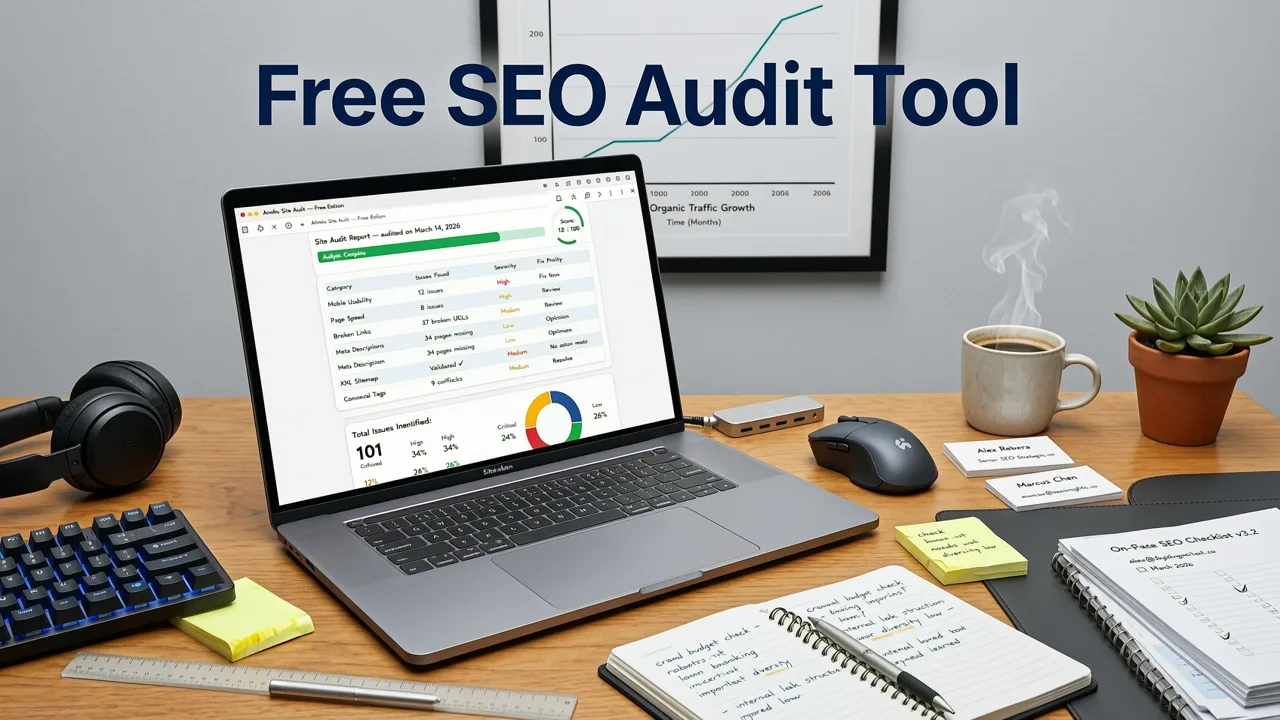
Modern SEO audits go far beyond keyword density. In 2026, search algorithms evaluate user experience, entity relevance, and technical health at a deeper level than ever before. A reliable free SEO audit tool scans four major categories:
1. Technical SEO Health
This includes crawlability, indexation status, HTTPS configuration, mobile responsiveness, page speed metrics, and structured data implementation. Google Search Central documentation continues to emphasize that technical foundations are non-negotiable for ranking eligibility.
2. On-Page Optimization
Audit tools examine title tags, meta descriptions, header hierarchy, image alt attributes, internal linking structure, and content relevance to target queries. In 2026, semantic completeness matters more than exact-match keyword repetition.
3. Content Quality & Gap Analysis
The best tools identify thin pages, duplicate content, outdated information, and missing topic clusters. They also compare your content depth against competing pages targeting the same queries.
4. Off-Page & Authority Signals
While free tools have limits here, many still surface your backlink profile health, referring domain diversity, and anchor text distribution — critical factors for competitive niches.
How to Run a Free SEO Audit: A Step-by-Step 2026 Workflow

Running an audit doesn't require a marketing degree. Follow this workflow and you'll have a prioritized action list within 30 minutes.
Step 1: Enter Your Domain & Select Audit Depth
Most free SEO audit tools let you enter a root domain or specific URL. In 2026, choose the deepest crawl available — ideally 500 pages or more — to capture your full site architecture.
Step 2: Review the Technical Summary First
Start with the technical scorecard. Look for red flags like 4xx and 5xx errors, redirect chains, missing canonical tags, and slow Largest Contentful Paint (LCP) times. Fix these before anything else because they block indexing and hurt user experience.
Step 3: Analyze On-Page Issues by Priority
Sort on-page findings by impact. Missing title tags and duplicate meta descriptions rank highest because they directly affect click-through rates and relevance signals.
Step 4: Check Content Gaps & Thin Pages
Identify pages with fewer than 300 words, low word count relative to competitors, or outdated publish dates. These are prime candidates for refresh or expansion.
Step 5: Export Your Report & Build an Action Plan
Download the audit report as a CSV or PDF. Group issues into quick wins (under 30 minutes), medium projects (under one week), and strategic initiatives (under one month).
What to Look for in a Free SEO Audit Tool in 2026
Not all free tools are created equal. Here's a comparison of the features that matter most when choosing the right one for your needs.
| Feature | Why It Matters in 2026 | Must-Have? |
|---|---|---|
| Crawl depth (500+ pages) | Captures full site architecture and hidden errors | Yes |
| Core Web Vitals scoring | Direct ranking factor for desktop and mobile | Yes |
| Schema markup detection | Validates structured data for rich results | Yes |
| Mobile usability checks | Mobile-first indexing is the default | Yes |
| Content freshness alerts | Flags outdated pages losing relevance | Helpful |
| Competitor benchmarking | Shows where you lag behind top results | Helpful |
| CSV/PDF export | Enables team collaboration and tracking | Yes |
Common SEO Audit Findings in 2026 (and How to Fix Them)
After reviewing thousands of audits this year, certain issues appear on almost every site. Here are the most frequent and how to resolve them.
Missing or Duplicate Meta Descriptions
Meta descriptions don't directly influence rankings, but they drive click-through rates from search results. Write unique, benefit-driven descriptions between 140 and 155 characters for every page.
Slow Largest Contentful Paint (LCP)
LCP should load within 2.5 seconds. Optimize hero images with next-gen formats, defer render-blocking JavaScript, and leverage a content delivery network to hit this target consistently.
Broken Internal Links
Internal links distribute authority and help crawlers discover new content. Use your audit report to find 404 errors and redirect them to relevant live pages with a 301 status.
Missing Schema Markup
Structured data helps search engines understand your content and can unlock rich snippets. Reference Schema.org for the correct markup types and validate with Google's Rich Results Test.
Thin or Duplicate Content
Pages with fewer than 300 words rarely rank for competitive queries. Expand them with original insights, supporting data, and answers to related questions. For duplicate pages, consolidate with canonical tags or merge into a single authoritative resource.
How to Turn Audit Results Into a Growth Strategy
An audit is only valuable if it leads to action. Here's how to translate findings into a prioritized roadmap.
Priority 1: Fix Blocking Technical Issues
Crawl errors, slow load times, and mobile usability problems prevent Google from properly indexing and ranking your pages. Resolve these first — they deliver the fastest impact with the least effort.
Priority 2: Optimize High-Traffic Pages
Use your analytics to identify pages that already receive impressions but have low click-through rates. Update their titles, meta descriptions, and content to better match search intent.
Priority 3: Expand Content Clusters
If your audit reveals thin content in key topic areas, build supporting pages that link back to your pillar content. This strengthens topical authority and improves rankings across the cluster.
Priority 4: Strengthen Internal Linking
Ensure your most important pages receive internal links from multiple relevant sources. This distributes page authority and signals importance to search engines.
Priority 5: Monitor & Re-Audit Quarterly
SEO is not a one-time project. Re-run your free SEO audit every 90 days to catch new issues, measure progress, and adjust your strategy based on algorithm updates.
When to Upgrade From a Free SEO Audit Tool to a Full Agency Partnership
Free tools are excellent for diagnostics, but they don't execute fixes or build long-term strategy. Consider working with an SEO agency when:
- Your site has more than 1,000 pages and technical debt is compounding.
- You need ongoing content creation, link building, and competitor monitoring.
- Your internal team lacks the bandwidth or expertise to implement recommendations.
- You want a custom strategy aligned with specific revenue and lead generation goals.
If you're evaluating costs, our SEO Agency Pricing Guide 2026 breaks down what to expect and how to budget smartly for sustainable growth.
Free SEO Audit Tool 2026: Final Checklist Before You Publish Changes
Before you implement any fixes from your audit, run through this quick checklist to avoid introducing new problems:
- Back up your website files and database.
- Test changes on a staging environment first.
- Validate all redirects with a 301 status code.
- Re-check Core Web Vitals after making performance updates.
- Submit updated sitemaps to Google Search Console.
- Re-run your free SEO audit tool to confirm issues are resolved.
Conclusion: Start Your Free SEO Audit Today
A free SEO audit tool in 2026 is the fastest way to understand why your site isn't ranking and what to fix first. Whether you're managing a local business website or a national e-commerce brand, the insights you uncover will directly impact your traffic, leads, and revenue.
Don't let technical debt and content gaps silently cost you customers. Run your audit now, prioritize the fixes, and if you need expert help executing the strategy, reach out to our team for a custom growth plan tailored to your business goals.
Related resources
Frequently Asked Questions
Is a free SEO audit tool accurate enough for 2026 ranking factors?
Yes, modern free SEO audit tools accurately identify technical issues, on-page problems, and Core Web Vitals scores that directly impact 2026 rankings. While they may not provide the depth of paid enterprise tools, they deliver reliable diagnostics for most small to mid-sized websites.
How often should I run a free SEO audit on my website?
Run a free SEO audit at least once every 90 days. If you publish content frequently or make regular site changes, monthly audits help you catch issues early and maintain consistent performance in search results.
What are the most important metrics a free SEO audit tool should check?
The most critical metrics include crawl errors, page speed and Core Web Vitals, mobile usability, missing or duplicate meta tags, broken internal links, thin content pages, and schema markup implementation. These directly affect indexing and ranking eligibility.
Can a free SEO audit tool help with local SEO?
Most free tools focus on technical and on-page SEO rather than local-specific factors like Google Business Profile optimization or local citation consistency. For local SEO, complement your audit with a dedicated local SEO checklist to cover all ranking factors.
What should I do after completing a free SEO audit?
Export your audit report, categorize issues by priority and effort, fix blocking technical problems first, then optimize high-traffic pages and expand thin content. Re-run the audit after implementing changes to confirm resolution and track improvement over time.
Related Articles


Explore more practical SEO Services and appraisal guides.
View all articles